
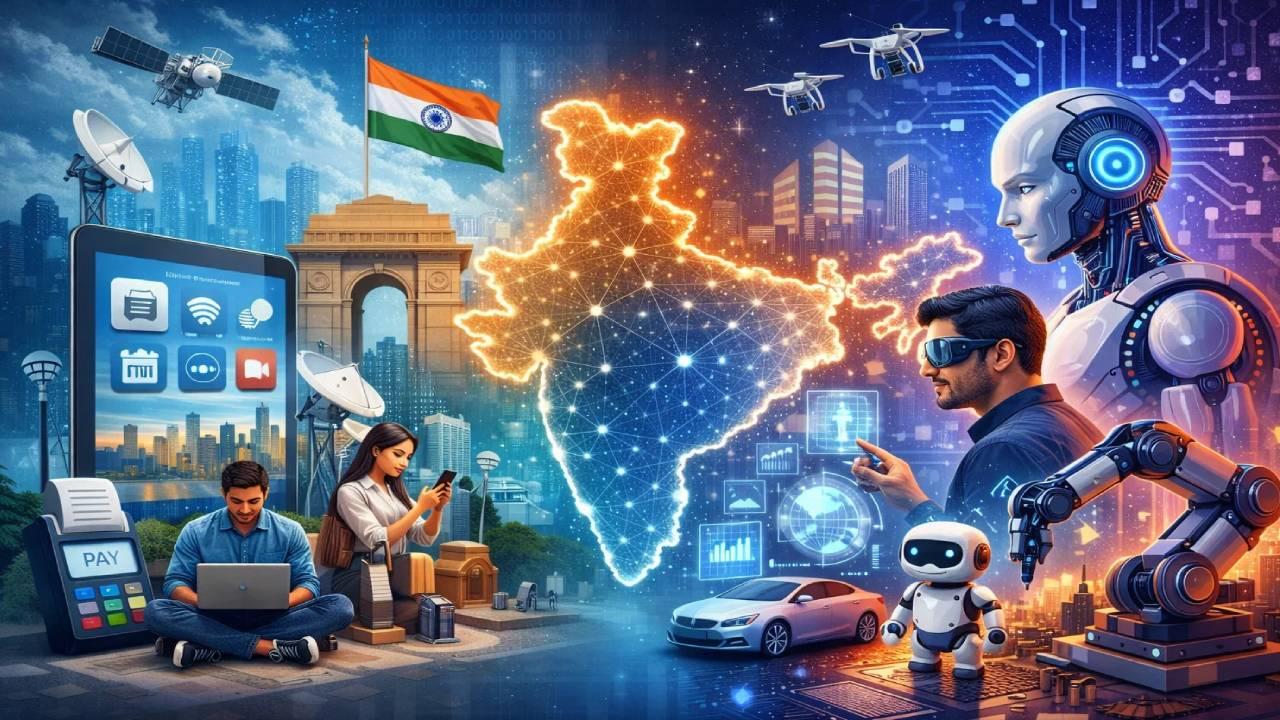
India’s artificial intelligence journey received another major push on August 15, 2026, as Prime Minister Narendra Modi highlighted AI skilling for the country’s youth in his Independence Day address.
One of the biggest announcements was a plan to train 1 crore (10 million) young people in artificial intelligence through specialized skilling courses. The announcement comes at a time when AI is rapidly changing how people study, work, create content and build businesses.
For students, freshers and working professionals, the message is simple: AI skills are becoming increasingly important for the future of work in India.
But what does the announcement actually mean?
And more importantly, what AI skills should you start learning right now?
Let’s break it down.
What Did PM Modi Announce About AI on August 15, 2026?
During his Independence Day address, PM Modi announced an initiative aimed at training 1 crore youth in artificial intelligence through specialized skilling courses.
The AI initiative was presented as part of a broader focus on creating opportunities for India’s young population and preparing them for emerging industries and future jobs. The speech also included an announcement around free online coaching for students preparing for competitive examinations.
The AI announcement is particularly significant because India’s workforce is entering a period where AI is expected to affect almost every major industry—from software and finance to healthcare, education, marketing and manufacturing.
The key takeaway
The goal isn’t necessarily to turn every student into an AI researcher.
Instead, AI literacy and practical AI skills can help young people work more effectively with new technology.
Why Is AI Training Important for India’s Youth?
AI is no longer limited to research laboratories or large technology companies.

Today, people are using AI for:
- Writing and research
- Software development
- Data analysis
- Graphic design
- Video creation
- Presentations
- Marketing
- Customer support
- Education
- Business automation
- Content creation
The Indian government’s existing AI-skilling initiatives also show that AI literacy is being treated as a broader national priority.
For example, YUVA AI for All is a free national AI literacy course designed to provide foundational AI knowledge and is available in multiple Indian languages. The government has described it as an initiative targeting 1 crore citizens for foundational AI proficiency.
This means today’s announcement isn’t happening in isolation. It fits into a wider push toward AI education and workforce readiness.
What Does the 1 Crore AI Training Plan Mean for Students?
For students, this could be an important opportunity.
You don’t necessarily need to start with advanced programming or complicated mathematics.
A beginner can start by understanding:
1. AI Fundamentals
First learn:
- What is Artificial Intelligence?
- What is Machine Learning?
- What is Generative AI?
- What are Large Language Models?
- How do AI chatbots work?
- What are AI limitations?
These concepts create the foundation for everything else.
2. Prompt Engineering
Knowing how to communicate effectively with AI is becoming a useful practical skill.
Students can learn how to create better prompts for:
- Research
- Writing
- Coding
- Summarization
- Brainstorming
- Data analysis
- Learning new subjects
But prompt engineering shouldn’t be learned in isolation. It becomes much more valuable when combined with another skill.
3. AI + Coding
For students interested in technology, combine AI with:
- Python
- JavaScript
- APIs
- Automation
- Data structures
- Machine learning basics
You don’t need to become an AI engineer immediately.
Understanding how applications can use AI APIs is already a useful starting point.
4. AI + Business
Students interested in business can learn:
- AI automation
- AI marketing
- Customer-service automation
- AI research
- Data analysis
- Business intelligence
5. AI + Creative Skills
AI is also changing creative work.
You can combine AI with:
- Graphic design
- Video editing
- Presentation design
- Content creation
- YouTube
- Social media
- Copywriting
This is especially useful for creators and freelancers.
What AI Skills Should You Learn in 2026?
If you’re starting from zero, don’t try to learn everything.
A practical roadmap could look like this:
| Level | Skills to Learn |
|---|---|
| Beginner | AI fundamentals, ChatGPT-style tools, prompting |
| Intermediate | AI research, automation, AI productivity |
| Technical | Python, APIs, AI applications |
| Advanced | Machine learning, LLMs, AI agents |
| Career-focused | AI + your existing profession |
The most important idea is:
Don’t replace your existing skill with AI. Combine your skill with AI.
For example:
Developer + AI = AI-powered software developer
Designer + AI = AI-assisted designer
Marketer + AI = AI marketing specialist
Teacher + AI = AI-assisted educator
Video creator + AI = AI video creator
That combination can be more valuable than simply knowing how to use a chatbot.
What AI Jobs Could Benefit From This Growth?
AI is creating opportunities across multiple categories.
Some areas worth watching in 2026 include:
AI/ML Engineering
People who build and deploy AI systems.
AI Application Development
Developers who integrate AI models into websites, mobile applications and business software.
Data & Analytics
AI-assisted data analysis and business intelligence are becoming increasingly important.
AI Automation
Businesses need people who can identify repetitive processes and automate them using AI and software.
AI Content & Creative Work
AI-powered video, image, presentation and content creation is opening opportunities for creators and freelancers.
AI Product Roles
Companies also need people who understand both technology and user/business requirements.
Can Beginners Learn AI Without Knowing Coding?
Yes.
You don’t need programming knowledge to start learning AI.
A beginner can start with:
- AI fundamentals
- Generative AI tools
- Prompting
- AI research
- AI productivity
- AI content creation
- Basic automation
Then, if you enjoy technology, move toward Python, APIs and AI application development.
This approach is particularly useful for students who aren’t sure whether they want a technical AI career.
Free AI Learning Opportunities in India
One useful starting point is YUVA AI for All, a government-backed AI literacy initiative.
The programme is designed as a free foundational AI course and is available in 11 Indian languages. Government material says it is intended to help build foundational AI proficiency at large scale.
Other learning options can include:
- Government AI literacy programmes
- FutureSkills Prime
- University courses
- Open educational resources
- AI documentation
- Hands-on projects
- Free AI tools
Don’t focus only on certificates.
Building something with AI can be more useful than collecting certificates.
For example, instead of only completing an AI course, try building:
- An AI resume analyzer
- A study assistant
- A PDF summarizer
- A YouTube summarizer
- An AI content research tool
- An AI chatbot
- An AI presentation generator
Projects help turn theoretical knowledge into practical skills.
What Should College Students Do Now?
If you’re a college student reading this announcement and wondering where to start, here’s a simple roadmap.
Month 1: Understand AI
Learn the basics of:
- AI
- Generative AI
- LLMs
- Prompting
- AI limitations
Month 2: Learn AI Tools
Use AI tools for real tasks:
- Research
- Writing
- Coding
- Presentations
- Data analysis
- Image generation
Month 3: Build Projects
Choose one small project.
For example:
AI Study Assistant
or
AI Resume Analyzer
or
AI PDF Summarizer
Month 4+: Combine AI With Your Career
This is where things become interesting.
If you’re studying:
Computer Science: AI + coding
Commerce: AI + finance/data
Marketing: AI + marketing automation
Design: AI + visual creation
Education: AI + learning tools
The goal is to become someone who can use AI to solve real problems.
What Does This Mean for IT Jobs in India?
The rise of AI doesn’t automatically mean that all traditional IT jobs will disappear.
Instead, many roles are likely to change.
Software developers, analysts, designers, marketers and other professionals may increasingly use AI as part of their daily workflow.
That means professionals should focus on learning:
AI + domain expertise + problem solving
rather than treating AI as a separate subject.
India’s government has already described AI skills and AI-driven employment as important parts of the country’s future-ready talent ecosystem. A February 2026 PIB backgrounder noted rising demand for AI skills and highlighted initiatives including YUVAi and YUVA AI for All.
Is Learning AI Worth It in 2026?
For most students and professionals, yes—but learn it strategically.
You don’t need to learn every new AI tool that launches.
Instead, focus on transferable skills:
- Understanding AI
- Writing good instructions
- Evaluating AI output
- Working with data
- Automation
- Coding
- Problem solving
- Building AI-powered applications
AI tools will change quickly.
The underlying ability to understand, evaluate and apply AI will remain useful.
5 AI Projects Students Can Build
If you want to turn your AI learning into something practical, start with a small project.
1. AI Study Assistant
Upload notes and ask questions about them.
2. AI PDF Summarizer
Turn long documents into short summaries and key points.
3. AI Resume Analyzer
Analyze a resume and suggest improvements based on a job description.
4. YouTube Video Summarizer
Convert video transcripts into summaries and important timestamps.
5. AI Presentation Generator
Turn a topic into an organized presentation outline and slide content.
These projects can also become portfolio pieces when applying for internships or jobs.
PM Modi’s AI Announcement: What Should You Do Next?
The biggest takeaway from the announcement isn’t simply the number 1 crore.
It’s the direction.
India is putting increasing emphasis on preparing its young population for an economy where AI and emerging technologies play a larger role.
For students and young professionals, waiting until AI becomes a requirement in a job description may not be the best strategy.
Start learning now.
Begin with the basics, use AI tools regularly, build small projects and gradually combine AI with your existing career skills.
AI-Powered Podcast Editing Tools vs Traditional DAWs: Which Is Better in 2026?
Final Takeaway
PM Modi’s Independence Day 2026 announcement to train 1 crore youth in AI puts a spotlight on something that was already becoming increasingly important: AI literacy and practical AI skills.
For India’s students and young professionals, the opportunity isn’t just to learn how AI works.
It’s to learn how to use AI to solve real problems.
Whether you’re a developer, student, designer, marketer, teacher or entrepreneur, combining your existing skills with AI could help you stay relevant as technology changes.
The best time to start doesn’t have to be when a new course or government programme begins.
You can start learning today.
FAQs
What did PM Modi announce about AI on August 15, 2026?
PM Modi announced a plan to train 1 crore youth in artificial intelligence through specialized skilling courses as part of a broader focus on youth development and future-ready skills.
How many youth will receive AI training?
The announced target is 1 crore, or 10 million, young people.
Is AI a good career option in India in 2026?
AI is becoming increasingly relevant across technology and other industries. Government material also points to growing demand for AI skills and expanding AI-skilling initiatives.
Can I learn AI without coding?
Yes. Beginners can start with AI fundamentals, generative AI tools, prompting, research and productivity applications. Coding can be added later if you want to move into technical AI roles.
What AI skills should students learn in 2026?
Students can start with AI fundamentals, prompting, AI tools, automation and responsible AI use, then add coding, APIs, data analysis or machine learning depending on their career goals.
Is there a free AI course in India?
Yes. The government’s YUVA AI for All initiative provides foundational AI literacy and is available in multiple Indian languages.